autonomous trucks will fix the driver shortage problem. First of all, they're wrong. There's not a shortage problem. There's a turnover problem.
Before 1980, something like 60% of the industry was Teamster. Cheaper to have turnover because you can replace drivers more quickly. That leads wages to go down. This turnover must cost money.
Well, what are they doing? That must be crazy. No, you're missing the point. If you could just tell me, what is your name and what do you do for a living?
Well, I'm Steve Burks, and I retired 2 years ago as a professor of economics and management at the University of Minnesota Morris. I have been doing work in experimental behavioral economics and studying the economics of the trucking industry all the time in Morris, and I've actually been interested in the industry since 1976, a little while ago, I think before you were born. Tell me more about it. How— what was the connection to the trucking industry?
Well, I dropped out of a doctoral program in philosophy to go drive tractor-trailers for a living in 1976. Started out hauling steel and then ended up doing freight boxes In the 10 years I spent as a full-time driver, I did 2 years over the road and 8 years of city work, pickup and delivery, mostly for less-than-truckload firms. And here's the things I got out of that. Number one, I met my wife.
I delivered freight and she signed my freight bill one day and we traded phone numbers. But number two, I lived through economic deregulation, which happened in 1980, and I saw the industry changing and I saw jobs changing.
So is there a driver shortage in America? Well, in the short term, there have been both shortages and there have been surpluses of drivers.
Is there a long-term shortage? No. But trucking firms, especially in the long-distance truckload segment, have a real business problem which leads them to perceive a shortage. And what's that business problem?
It's that they always have very high turnover. The annual average from the ATA data over, like, oh, 30-something years is around 90% a year. For large truckload firms. What that means is that firms like that are always hiring, even when there are too many drivers and they're shrinking their fleet.
They have too many people quitting, so they still have to have hiring going on even though their fleet is getting smaller. And if you are somebody who is always trying to hire drivers no matter what the state of the economy, you perceive a long-term shortage.
So they have a real business problem. But if you think of it in economic terms as a shortage, you'll misunderstand how that labor market actually works and you'll end up with prescriptions for policy which will make the problem— well, won't fix it, might make it worse.
So do we know why the companies won't pay more? Is it the pay problem? Why are they losing all these drivers? What's the main cause?
So everybody says this turnover must cost money. Well, what are they doing? That must be crazy. No, you're missing the point.
There are 3 different issues involved in the cost of operation for a midsize or large long-distance truckload carrier. Number one is you can dispatch your trucks very efficiently, but then you treat your drivers like pinballs, and on average they will quit. Well, not everybody, you know, people are different, but you'll have a high quit rate.
Okay, or you can run them less efficiently, which leaves freight on the docks and runs you out of route miles, so your costs go way up and your profits go down, but they'll quit less.
Okay. Or you can pay really high wages compared to people's next best opportunity. We call that a compensating differential in economics. Or you can pay modestly and the drivers will quit more because the conditions are not good.
And the third cost is the cost of turnover. And the issue is not how much does turnover cost you. The issue for a manager of a truckload firm is what is the least cost mixture of these 3 costs? Well, industry history for 40-some years says run the trucks pretty darn hard, pay low for drivers who start, and if you survive the conditions and adapt to working, you know, 2,800 or 3,000 hours a year and being gone all the time, pay, pay those folks reasonably well, not hugely high in an hourly rate sense.
But your W-2 looks good because you work 2,800 or 3,000 hours a year and have relatively high turnover. And that's cheaper than basically doing the things, raising pay way up or making trucks inefficient, that would get turnover down. Do autonomous trucks solve that problem? Well, it's not so clear what's going to happen with autonomous trucks.
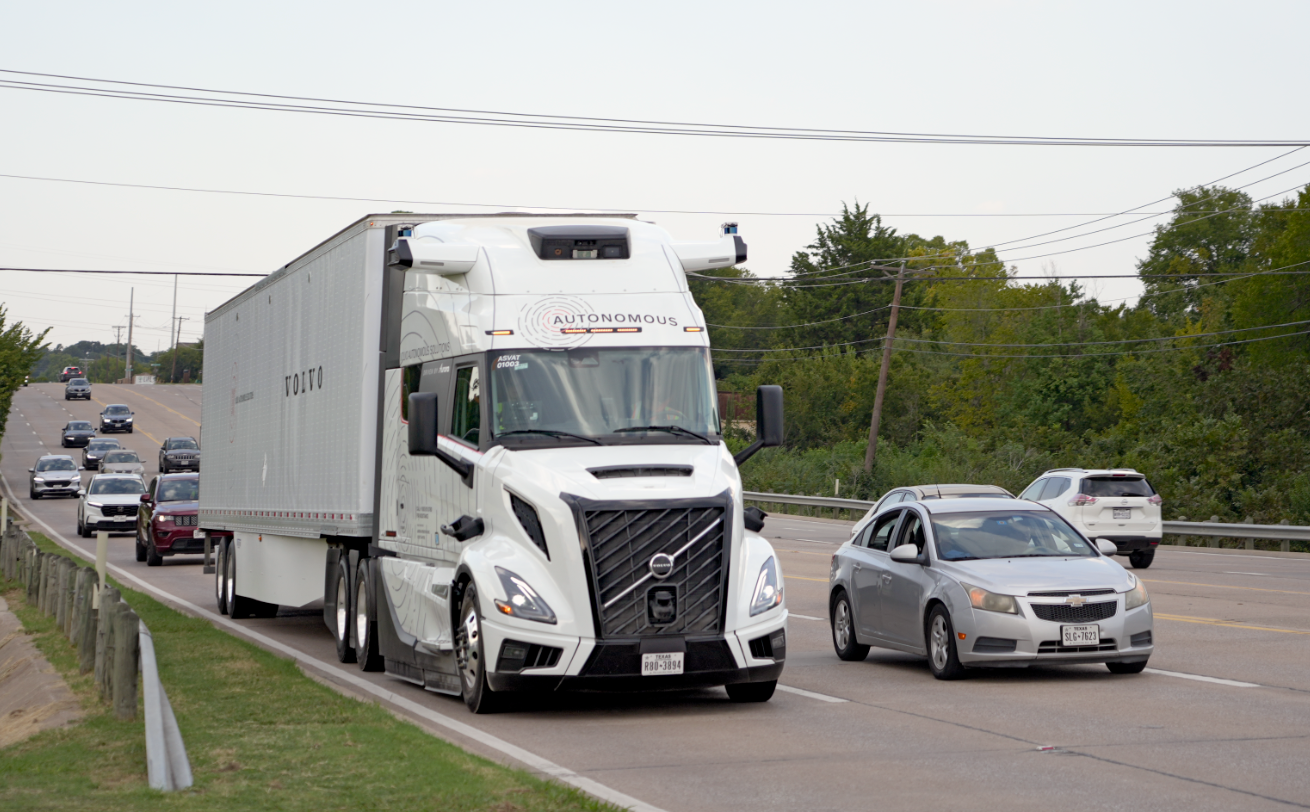
And I'm thinking hard about it, the mathematical model we developed, my colleagues and I, it wasn't just me, on the turnover trade-offs between turnover and operational efficiency and wage costs, that model suggests that autonomous trucks reducing the number of drivers you need per truck to less than 1, as it were, in the model, probably is going to raise wages somewhat. But not enough to offset the increase in dispatch intensity, and therefore turnover would likely go up.
Now, that's a toy model result, which might or might not be the case, but I think it's pretty clear that the people who say autonomous trucks will fix the driver shortage problem, first of all, they're wrong. There's not a shortage problem.
There's a turnover problem. Second, if companies adopt automated trucks because they're cheaper per mile in overall cost, that puts competitive pressure on those operations still using drivers and tends to mean costs have to be lower for those firms or for those operations. And that means the mixture of operational intensity, wages, and turnover costs has to be adjusted. Is it going to make drivers better off?
I think it's not clear. Will the driver wages go up in the areas where you cannot deploy an autonomous truck? And you really have to hire a human driver. Well, if autonomous trucks have taken away lots of the other driving jobs, so there are more people who are interested in those driving jobs, so it's cheaper to have turnover because you can replace drivers more quickly, that leads wages to go down.
The AV companies say that the work quality, the job quality will go up, that the drivers will get to spend more time with their families at home. With their friends. Do you agree with that? If it turns out that what gets automated is the long-distance components of long-distance truckloads, so it's only local work that's left, well, potentially.
But what happens to the working conditions and wages of those drivers who are left? It's not clear. Could be better, could be worse in terms of, for instance, the wage package compared to other jobs you could have. I mean, you wouldn't have to be gone all weeks at a time over the road, so that would be better.
But is there going to be a trade-off in that wages would be lower? Maybe. I just don't know. But it's not clear.
Let's talk about cents per mile versus annual salary. Does the pay structure affect safety?
Okay. There's, there's every reason from economic theory to think there is a relationship there.
The problem with trying to analyze the extent to which that's actually true and how big the effect is, is that there's lots of other important factors that affect safety also. And the report that I contributed to the writing of concluded that given the data available, we couldn't evaluate the claim that the type of compensation, piece rates, or the level of compensation, low, directly caused bad safety behavior. Because even though it's plausible that it does, there's lots of other stuff that would affect it, and the data that would allow us to untangle the causal relationships is almost all proprietary.
So in simple words, we think banning cents per mile would increase safety, but we cannot prove it.
Well, I think it's true. The committee conclusion was we can't scientifically evaluate this claim. Trucking before 1980 and trucking after 1980, how would you define these two? Well, before 1980, something like 60% of the industry was Teamster, and the Teamsters had negotiated over several contract cycles, major contract cycles, with the National Master Freight Agreement.
Pretty darn good wages. Trucking is essentially a semi-skilled job.
You know, you can really become a pretty decent trucker with some— with a 3 or 4 weeks of training and a year of experience. That's semi-skilled.
That's not skilled like a plumber or an electrician. But we were getting paid like plumbers or electricians. We had good money. And deregulation essentially broke— it took 15 years, but it drove the union out of most of trucking outside of UPS and ABF, you know, a couple of firms that still hang on.
Well, UPS is a big deal, but ABF is a fairly small niche in the less-than-truckload world. And wages went way down. Do you have any good news for the drivers? Well, there is right now.
After almost 3 years of too many drivers, right now there's actually a shortage. That's good news. That means it's easier to get hired. It's easier to switch to a job with higher pay.
It's easier to ask for more pay. But it's a short-term situation. Just as with the past, there are short-term surpluses and short-term shortages. We have a shortage now, but I wouldn't expect it to last more than a year or two.
All right, Steve, thank you so much. I really appreciate your insight. You're welcome, Chris.
.png)

.png)


.png)