

© 2026 CK Drive. All rights reserved.


A Student-Built Mars Rover Shows Where Tomorrow's Technology Begins
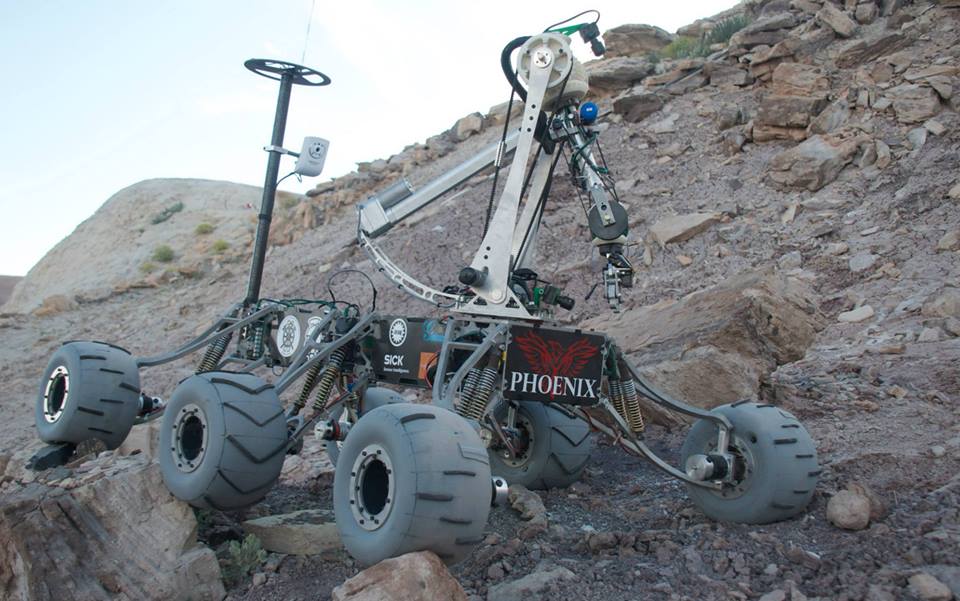
At SAE COMVEC in Schaumburg, Illinois, surrounded by the latest advancements in commercial vehicle technology, one of the most fascinating machines I came across wasn't a truck at all.
It was a Mars rover. Built entirely by university students.
I had the opportunity to speak with Alivia Dean and Isaac Lowe from Missouri University of Science and Technology (Missouri S&T) about their Mars Rover Design Team and its incredible achievements.
Standing next to their rover, Athena, I learned that the team had just won the 2026 University Rover Challenge, an international competition held in the Utah desert, for the second consecutive year.
But what impressed me most wasn't the championship. It was learning how much work, research and knowledge goes into creating something like this.
Innovation Doesn't Happen Overnight
The Missouri S&T team has been developing Mars rovers for nearly 15 years. Every year, a new group of students builds upon the knowledge and experience of those who came before them.
They don't simply build a robot, compete and move on. They study previous designs, identify weaknesses, experiment with improvements and sometimes completely rethink components that already work.
Isaac explained how the rover's suspension system had been refined over several years to keep its six wheels in contact with challenging terrain.
The rover also features a robotic arm and interchangeable scientific equipment. One of the systems they developed can collect soil samples from below the surface and analyze their composition using a spectrometer.
Think about that. Students are building machines capable of performing some of the same tasks we ask robots to perform on other planets.
And this process continues year after year, with new students bringing fresh ideas while learning from years of previous development.
Universities Are Where the Future Begins
This conversation made me look at technology a little differently.
We often associate innovation with major corporations, technology startups and familiar brands. We see a new vehicle, an advanced safety system or an autonomous machine and admire the technology behind it.
But how often do we think about where those ideas originated?
So much of the technology we use in everyday life has roots in university research, where students, professors and engineers spend years, sometimes decades, experimenting, solving problems and improving upon earlier discoveries.
What we see as a finished product today may have started as a university research project many years ago.
And the knowledge doesn't disappear when a student graduates. It gets passed along, challenged and improved by the next generation.
That's what I found so fascinating about this rover. It's not just a machine. It's the result of years of accumulated knowledge and a platform for the next generation of engineers.
From a University Workshop to Another Planet?
There was something pretty special about being able to stand next to and actually touch a machine designed to tackle the challenges of exploring another planet.
Athena itself is a student competition rover, not a spacecraft scheduled to travel to Mars. But who knows where the ideas, technologies and people behind this project will end up?
Perhaps some of these students will eventually work on machines that travel millions of miles through space, explore unfamiliar terrain and send back information that changes our understanding of the universe.
Others may take their knowledge into automotive engineering, robotics, autonomous transportation or industries we haven't even imagined yet.
I came to SAE COMVEC to learn about the future of transportation. I left this particular conversation with a greater appreciation for the people who are developing the technologies that might shape that future.
And it reminded me that behind every major technological breakthrough are countless hours of research, experimentation, failures and improvements that most of us never get to see.
Watch my full interview with Alivia Dean and Isaac Lowe from Missouri S&T to get a closer look at their championship-winning Mars rover, learn how its technology works and discover why projects like this are about much more than winning a competition.
