So we'll know when things are going to fail and we're going to be able to predict that and do something about it before it needs to visit the shop.
So like a real-life example would be that I will know that my turbo is about to fail before it actually fails, right? Correct. Yeah.
My name is Julian. I'm responsible in KPI-T for our after-sales business.
So what is KPI-T?
So KPI-T is a software mobility company.
We work with many of the major OEMs. We're very much into how the software within the vehicles work and operate and how we bring that together for integration.
Also how we work with providing better uptime, better efficiencies as well for the customers. Class 8 on-highway trucks, they always— when we think of them, we think of mechanical, heavy-duty, hardcore machines.
How is software company involved in an on-highway Class 8 vehicle?
Software is absolutely fundamental to the vehicles, even now, even before we move to the future.
So there is so much software already on board the vehicles, and it's hugely important for both the safety, for the fuel efficiency.
So software Software is everywhere.
It's just maybe you can't see it. How is the involvement of software and AI in the commercial vehicle right now? Is it accelerating? Is there more and more software?
Okay.
So I think the software-defined truck or software-defined vehicle, which is coming, this is the next evolution or even revolution within trucking. Because what we'll see is we'll have much more ability to configure the truck and make it more adaptable and suitable.
So instead of you taking it in for a let's say, in for repair, or you're taking it in to be updated and configured, the software will be doing that for you.
So the fundamental change of the software-defined vehicle and making it absolutely, you know, better benefits as far as efficiency, better benefits from the increased uptime.
So say absolute tremendous change into the way that the trucks are built. Can you give me an example? Like the mechanical stuff doesn't change, the hardware is the same, same engine, same transmission.
So what can possibly the software do to make my truck better? Well, with better data and better information, We're able to configure the software, whereas normally in most trucks at the moment you may have software which is inside the control module. It's pretty much fixed. We can change some parameters, but we can only change a certain amount.
Within software-defined, we'll be able to change nearly all the parameters.
Okay, so we learn more and then we can implement the data.
Absolutely. Yeah, I mean, we're still obviously we're still gonna have diesel trucks, but the way in which we're able to deploy features and enhancements and modifications, all of that will change because everything will be done over the air.
And then, you know, you won't be visiting the workshop.
So the idea is that we'd be able to both maintain the vehicle, look after the vehicle, increase the uptime, keep it running more efficiently without bringing it in for repair. One of the biggest problems for a fleet owner is unexpected breakdowns. Do you think software will help with predictability that we'll know when the truck is about to break down?
One of the real benefits of software-defined vehicle is that we get so much better data and we're also able to deploy some agents on the vehicle itself to— for it to do its ongoing monitoring.
So the uptime is going to absolutely increase.
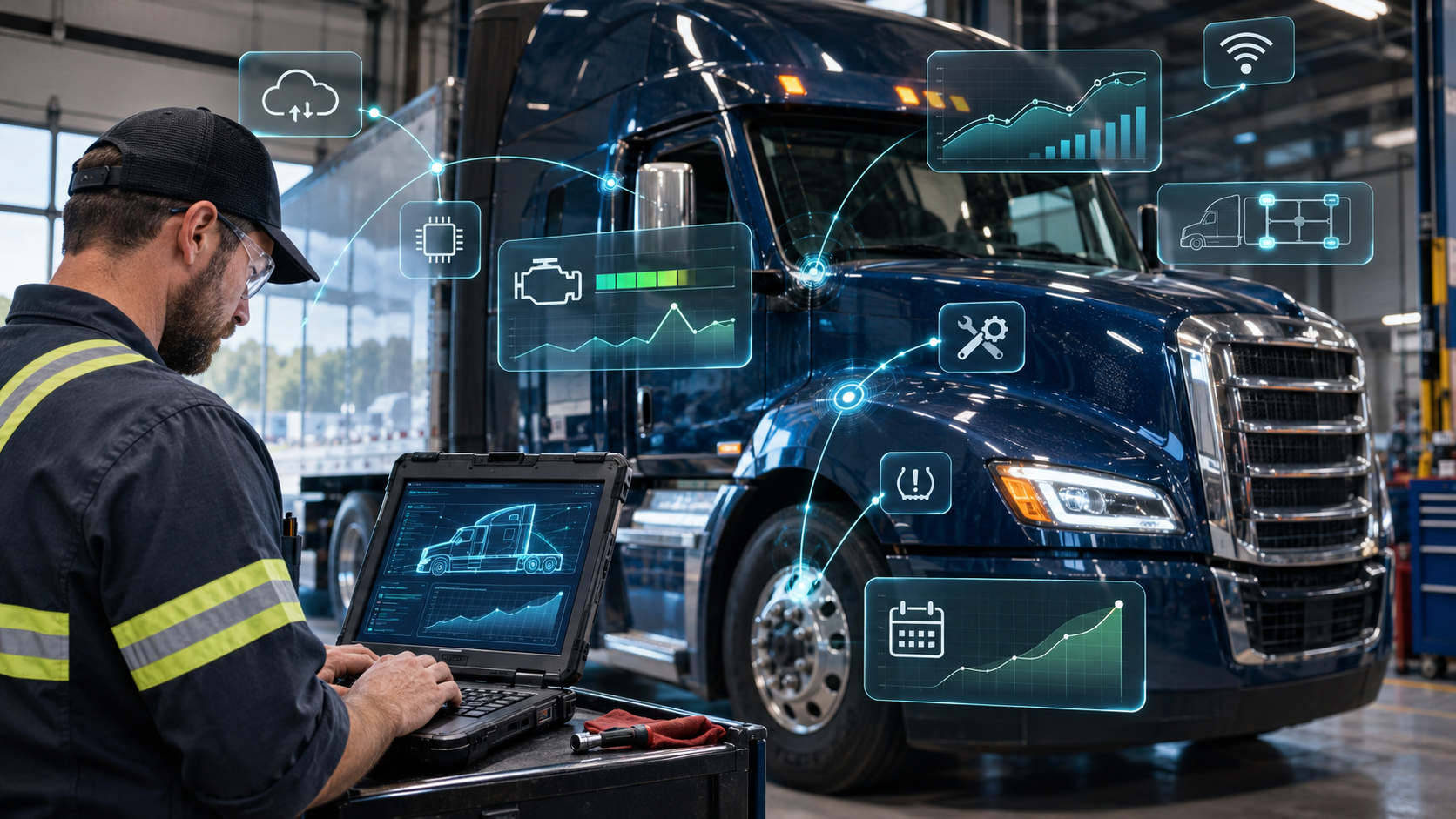
So with these With this new software, we would be able to predict both from a prognostics point of view, but also from a predictive maintenance perspective as well.
So we'll know when things are gonna fail, and we're gonna be able to predict that and do something about it before it needs to visit the shop.
So like a real-life example would be that I will know that my turbo is about to fail before it actually fails. Correct.
So I can bring my truck back to my shop and fix it before it happens on the road. Or better service still, that we're able then communicate with the operator or the fleet operator and say, hey, look, these are the trucks that could could fail, we're going to be able to predict when it's going to fail and then we can start packaging things together.
So when the vehicle does come off the road, yeah, for routine maintenance, so we can get much more of that work done rather than it coming backwards and forwards into the shop. What about fleet-wide efficiency? Can we identify drivers that are less efficient?
Absolutely.
Yeah. Abusing the equipment. I mean, there's obviously more use case of, say, being able to say, well, what is the driver doing? What's the operator doing?
But I think more on the positive side rather than the abuse side, you know, what we'd be able to do is the software could adjust itself based on the driver conditions, how they're operating, how they're working, the conditions that the vehicle is in. Is it altitude? Are they doing— bringing much heavier loads? All those things can be adjusted within the software.
What is your vision for the future of commercial vehicles?
Let's say 5 years from now. I don't think we can predict 10 years from now with the AI and how quickly it progresses. But how do you see the commercial trucks in 5 years?
I think it's still going to be a mixed blend. I mean, we're still going to see commercial vehicles with traditional engines. We're going to see probably certainly an increase in electric drive. We're gonna see probably the alternative fuels coming in there as well.
But I think it's gonna be a blend because I don't think there's any one use case for one particular— because there's so many use cases for trucks that we're always gonna need a variation. But I do see the increase in electric. We will see an increase in alternative fuels.