We know that that's how the cargo thieves are upping their game, becoming more sophisticated at stealing the industry's cargo. Our operational cost of trucking research has found that costs continue to climb. And in our 2026 report, we hit the highest cost we've seen in the 17-year history of that research. What is your name?
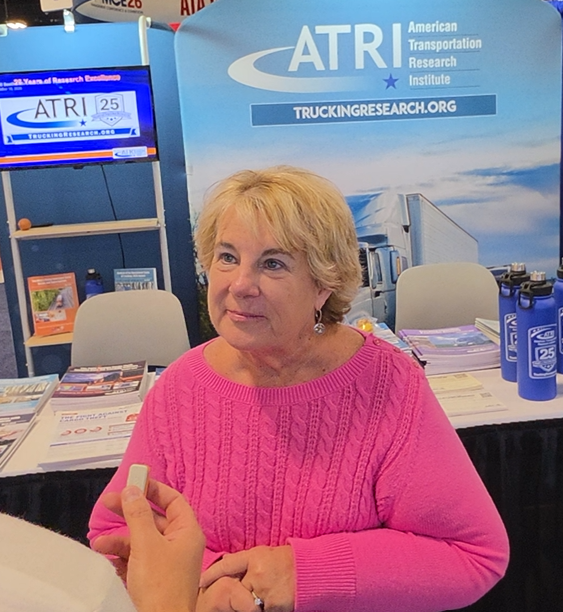
What do you do for a living? I'm Rebecca Brewster. I'm the president and chief operating officer of the American Transportation Research Institute. What does ATRI do?
ATRI is the trucking industry's not-for-profit research organization.
So everything we do has one mission. And that's research to make the industry safer and more productive. Do you know everything about trucking?
There are a few things I haven't learned yet in 34 years, but I'm working on it. What is the number one industry issue in trucking for 2026?
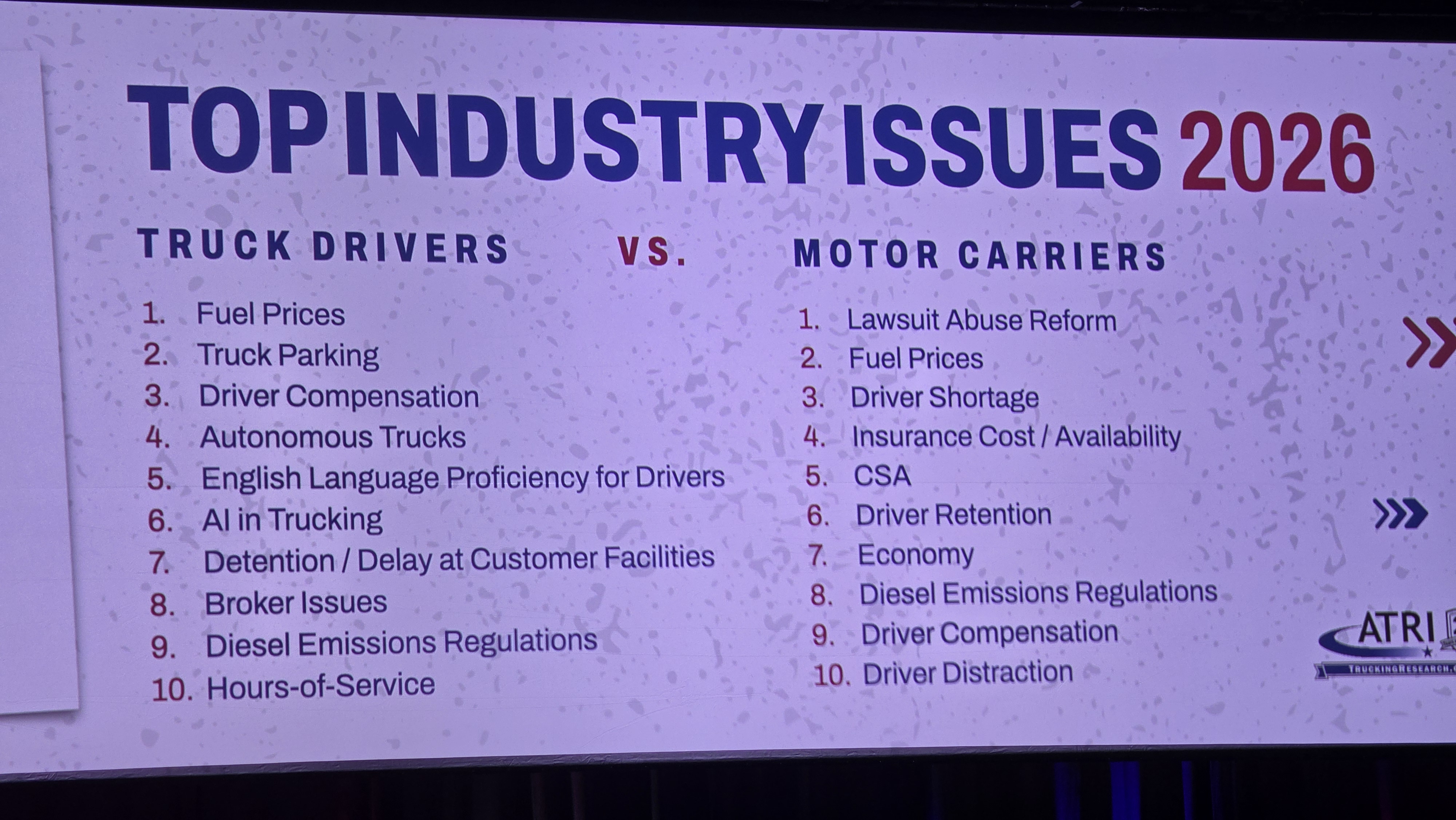
So we just released our top industry issues survey, and the number one issue this year is fuel prices, which I don't think is a surprise to anyone. Anyone who's been to the gas pump lately even knows what it's like.
And it's even worse for truckers out there. Has this ever come up in the past? Fuel cost was the number one issue in the inaugural one of these surveys in 2005. Then we saw it again as the top issue in 2008 and once again in 2022.
Is there anything new this year that showed up on your list that you haven't seen ever in the past? We didn't have any new issues on this year's survey, but we saw several that debuted last year that stayed in the top 10. One of those is diesel emissions regulations, concern over the model year 2027. Vehicles and the increased cost of those because of the low NOx rule.
And the other one that actually climbed this year from number 10 last year to number 7 this year is artificial intelligence in trucking. This is an autonomous truck. Should the drivers be scared? I don't think drivers should be scared of the autonomous technology.
I mean, we're still going to need that face to be the connection to the customers. I'm one of those old dogs myself, so I understand that it is hard to teach us new tricks. I've only started to dig I'm trying to dip my toe into the AI world and use it to help me do my job better. But I understand the concern because it is a whole new— it's a whole new world for us and we just don't necessarily understand all the potential.
And certainly there are, particularly with AI, some dark sides to it.
We know that that's how the cargo thieves are upping their game, becoming more sophisticated at stealing the industry's cargo.
So there are two sides to that coin.
And so I understand why there's— it's on a list of concerns.
When we say let's fix the trucking industry, are we fixing it for the drivers? Are we fixing it for the carriers? I think if you fix one, you're fixing it for both, quite frankly. Their issues are different, but on the driver side, the lack of available truck parking is one of their top concerns.
If we fix that, they're gonna be happier, they're gonna stay longer, they're gonna— this is gonna be an industry they're gonna wanna be in.
So that addresses the motor carriers' concerns of finding and keeping the best drivers. Anything else that stood out this year? I was thrilled with the response.
We had over 3,000 respondents to it. We had had the economy as the number one issue for the past 3 years. It actually dropped down to number 6.
So I love it when we get a new top 10, even when it points to a really challenging situation like fuel prices being so high.
What about driver shortage and the English proficiency?
So driver shortage came back on the list. It had dropped out of the top 10 in 2025. It came back in at number 5.
And then ELP dropped down, I think, to number 12. 12 or 13. It was number 6 last year. How do you see the truck industry in 5 or 10 years from today? Well, certainly I hope we're gonna see more young people choose careers in the trucking industry, not just as drivers but as technicians and across the industry.
The other thing I hope we can see is more women in driving positions. ATRI's research has shown that women are much safer drivers than their male counterparts. That's what the data tells us.
So I hope we do a better job of recruiting and retaining women drivers.
I can only imagine it's not always just about money. There's a lot more to it, right? It's not. In fact, when we did a survey of truck drivers, both women and men, for that one study, we found that among women drivers, the top reasons they come into the industry— they like the independence of the driving job, they enjoy driving, and then they like that the pay is so competitive.
So it's not necessarily that it's all about the money. This job meets my needs for independence and I like driving. Is the home time getting more traction these days? It is.
It is. And fleets are recognizing that. And the younger drivers do require more home time. They do require more home time.
Not as big on weekend work, but unfortunately the supply chain operates 7 days a week.
So it's a, it's an interesting balance that fleets are having to go through. Are the carriers stepping up? I think they are.
I think they are. They're recognizing with the narrow margins, especially with the fuel prices, it's challenging. It's challenging. I mean, our operational cost of trucking research has found that costs continue to climb.
And in our 2026 report, we hit the highest cost we've seen in the 17-year history of that research. Do you listen to the drivers? Is there a way for them to contribute?
Absolutely.
So many of our research studies ask for driver input.
So the Top Industry Issues Survey is one. We just recently launched one for looking at the relationship between driver health and wellness and the industry's operational costs.
So we're looking for driver input on that one as well.
All of our surveys and data collection activities are on our website, truckingresearch.org. And we hope drivers will visit our website, take part in our latest data collection, and then download our studies. And we need more company drivers to go and participate, right?
Absolutely.