[00:00] 2027 EPA engine.
[00:02] As we transition into the future, we have the hydrogen options there as well.
[00:06] That automated transmission will drop a gear and climb the hill.
[00:09] It's approved for up to 250,000 pounds.
[00:12] My name is Dwayne Teagles.
[00:13] I'm the powertrain product marketing manager for Volvo Trucks.
[00:15] What is this?
[00:16] So this is our new VNL platform.
[00:19] Completely new design here from the electrical architecture, the powertrain, the engine, fully automated manual transmission.
[00:28] What is the one feature of this truck that makes it stand out from the competition?
[00:34] What is the one thing that you guys are the most proud of?
[00:37] When you look at the truck, one, it's visually appealing.
[00:40] It's a beautiful truck.
[00:41] But the other side of it is the aerodynamics of this truck.
[00:45] We've been able to get the truck to become more aerodynamic.
[00:48] What that does is reduce the required horsepower to pull that load down the road, which increases fuel efficiency.
[00:55] So it all translates into fuel efficiency and economy.
[00:58] Exactly.
[00:59] And it runs that engine just a little bit less.
[01:01] It allows us to run really fast ratios, run the engine at low RPMs, just kind of sipping fuel.
[01:07] And then as we want to climb a hill, that automated transmission will drop a gear and climb the hill.
[01:12] So it's, it's an impressive piece of equipment.
[01:14] Let's take a look at the heart of this beauty.
[01:16] Yeah, let's walk over to the engine.
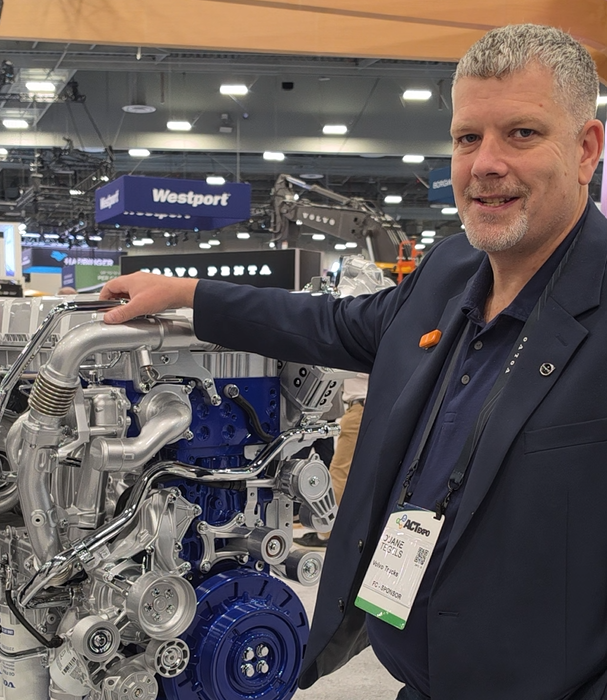
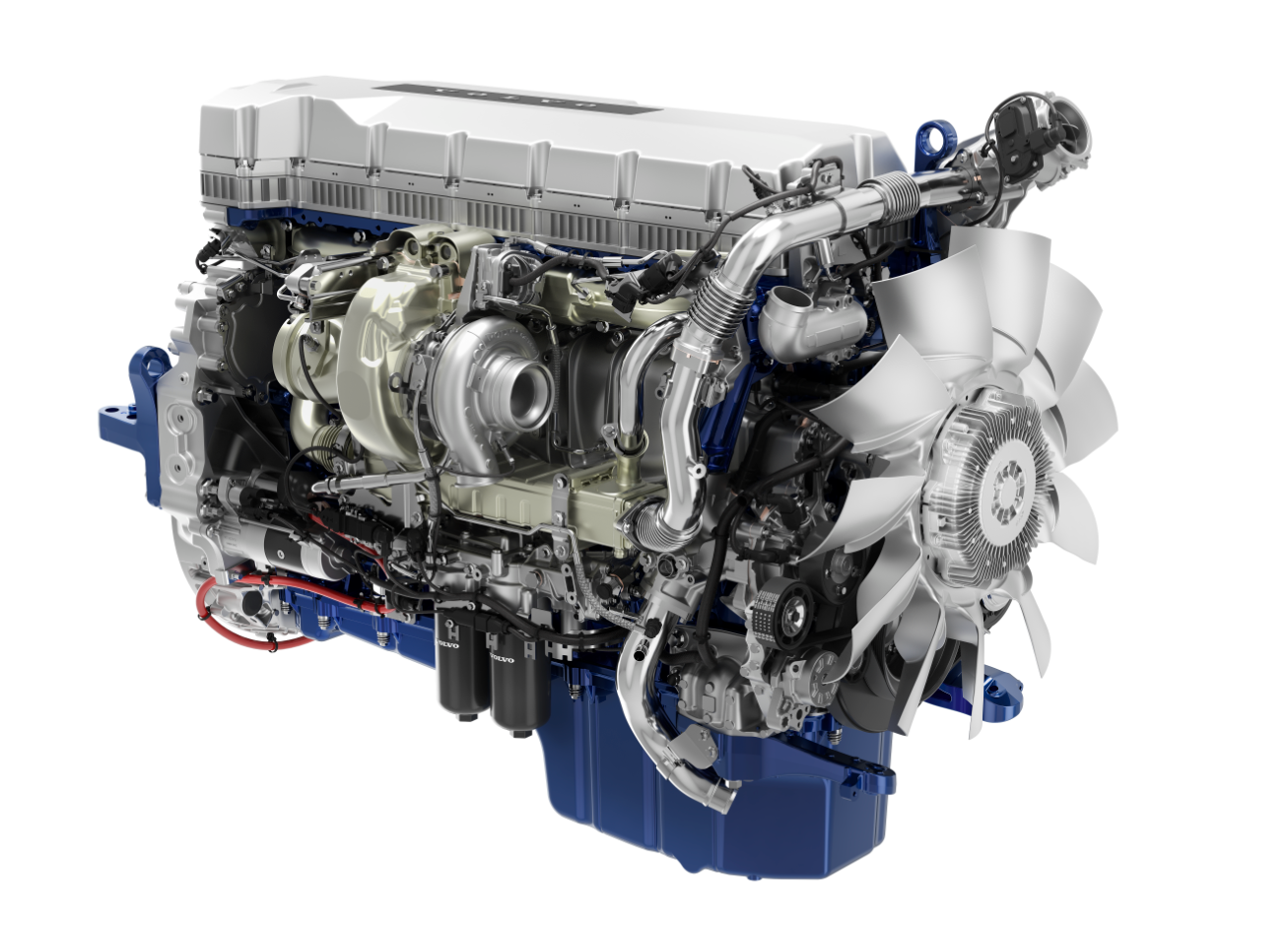
[01:18] So this is our new platform here.
[01:20] It's a 2027 EPA engine, uh, 0.035 NOx.
[01:24] You know, the requirement was to drop NOx by 83% and reduce soot now without affecting fuel economy and also performance.
[01:33] Now we do have some improvements as far as new upgrades in horsepower.
[01:39] This engine's available up to a 540-horse engine, 1,950 foot-pounds.
[01:45] Transmission that couples with this engine is available in either a 12, a 13, or a 14-speed.
[01:50] The overall perception is that automatic transmissions are not as tough as manual transmissions for the hardcore application, mountain driving, maybe vocational trucks.
[01:59] Is that the case with your transmission, the I-Shift here?
[02:02] Now, the transmission that we have is a fully automated manual, so again, It has the constant mesh gears in it.
[02:11] It's approved for up to 250,000 pounds with that transmission.
[02:15] So no worry for anything.
[02:16] So the core is the same as if you were to get a manual.
[02:19] It's the same pretty much hardware.
[02:21] It's just you have the computer do the shifting for you, right?
[02:24] Essentially, yes.
[02:24] Yep.
[02:25] A manual transmission, but computer shifting it for you.
[02:27] I know that we have Volvo in Europe, made in Sweden.
[02:30] And we have Volvo North America that looks completely different.
[02:34] Yes.
[02:34] Do they have anything in common besides the name?
[02:36] You know, they do have a common DNA.
[02:39] You know, the engine platform that you see in the North American version, same engine, same transmission.
[02:46] A lot of the architecture as far as the electrical architecture on the truck, very similar.
[02:52] So, you know, we use common platforms across the globe.
[02:56] Where are these engines and the trucks made?
[02:58] So these are built in Hagerstown, Maryland.
[03:01] The engine, the transmission are all built up there.
[03:03] The truck is 100% US-built, and that's in Dublin, Virginia.
[03:08] What's in the future for Volvo in terms of powertrain?
[03:11] Are you guys going electric?
[03:13] Is there a hybrid version on the horizon?
[03:16] Yeah.
[03:16] So we've got several different offers.
[03:18] We have, you know, the internal combustion engine here that's always been tried and true.
[03:21] It'll continue to be there as well.
[03:24] We do have our battery electric vehicle, which you see behind us here.
[03:27] And we do have hydrogen under production right now with a joint venture with Cellcentrics.
[03:33] So it seems like it's going to go many different ways depending on the application, right?
[03:38] Yeah, it will.
[03:39] You know, your regional haul applications, you know, that's where the electric vehicle really shines more on a long-haul application, you know, your combustion engines.
[03:46] And then as we transition into the future, we have the hydrogen options there as well.
[03:50] So if I'm a truck driver and, you know, my company puts me in a brand new 2027 Volvo with a D13, what's in it for me?
[03:58] You know, I think the, the really shining here is that transmission.
[04:02] When we brought out the new truck that we just showed over there, the shifting speed of that transmission was improved by 30%.
[04:09] Now, what does that do?
[04:10] That keeps you right in that sweet spot just a little bit longer.
[04:12] It gives you 2 benefits.
[04:13] One of the benefits is, is Well, it's fuel economy.
[04:17] You know, the drop in RPM between the shifts, much tighter.
[04:21] The other thing is it gives that driver the feeling of faster acceleration.
[04:24] We do have preloaded software into the truck, into the transmission side of it, so the truck knows the terrain as it's going down the hill.
[04:32] What it's designed to do is it'll come into a hill, it'll try to hold that gear as long as it possibly can before doing a downshift.
[04:39] It knows the height of the hill, the weight you're pulling, so once it gets to the top of the hill, it's going to disengage that clutch Allow the truck to roll over with the clutch disengaged, increasing your fuel efficiency, and then the exhaust brake will come in.
[04:53] It's not the same I-Shift as it was 10 or 12 years ago, huh?
[04:58] Wayne, thank you so much for your time.
[04:59] Really appreciate it.
[05:00] Thank you.
[05:01] Beautiful engine, beautiful truck.
.png)

.png)

.png)