What I learned from Volvo Trucks powertrain expert Duane Tegels about EPA 2027, the new D13, electric trucks, hydrogen and the future of heavy-duty powertrains
When people talk about the future of trucking, the conversation often turns into a debate between diesel and electric. Spend some time talking with the people actually developing heavy-duty powertrains, however, and the picture becomes much more complicated.
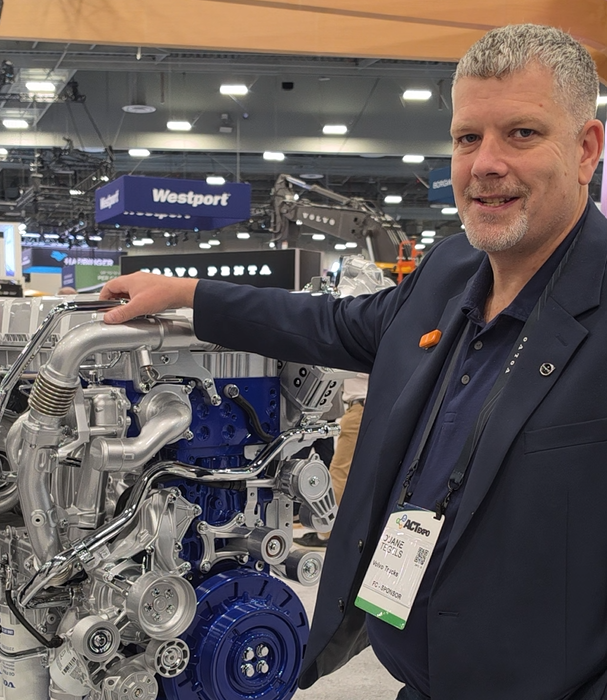
I recently had the opportunity to speak with Duane Tegels, Powertrain Product Marketing Manager at Volvo Trucks North America. We were standing next to Volvo's new D13 engine and the latest VNL, so naturally I expected to talk about horsepower, transmissions and fuel economy.
We did, but what I took away from the conversation was much bigger.
The diesel engine is not disappearing. At the same time, battery-electric trucks are already finding applications where they make sense, and hydrogen fuel-cell technology continues to move forward. Rather than betting everything on one solution, Volvo is developing several paths at the same time.
That may be a much more realistic picture of where trucking is headed.
EPA 2027 is a major change for diesel engines
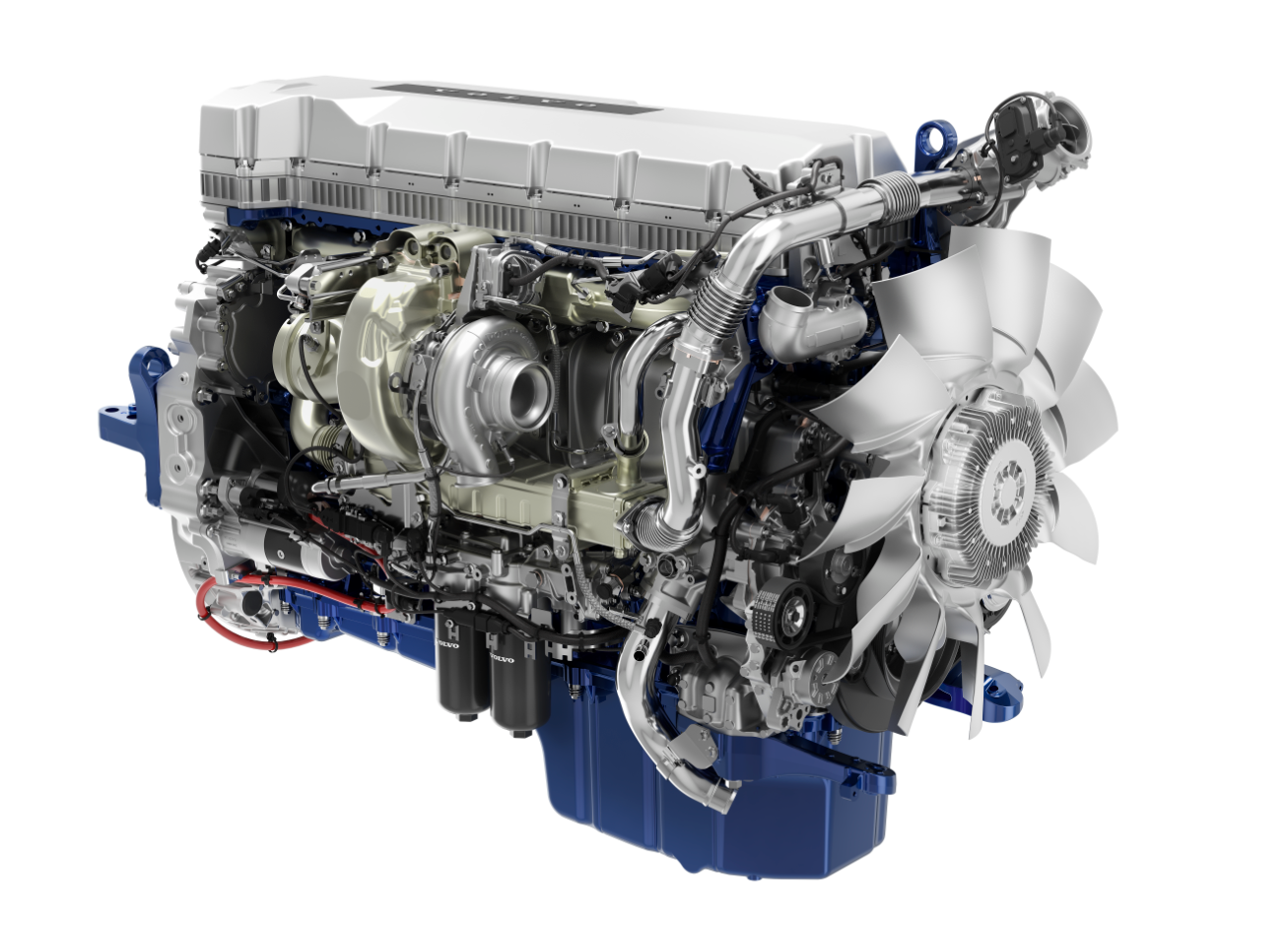
One of the most important things Duane showed me was Volvo's new D13 developed for the EPA 2027 emissions requirements.
For anyone who remembers what happened around 2010, new emissions regulations can make fleets and owner-operators nervous. The introduction of SCR, DPF and DEF fundamentally changed the modern diesel truck. It also created a new generation of emissions equipment that fleets had to learn how to operate and maintain.
EPA 2027 represents another major step.
The new federal standards significantly tighten NOx requirements beginning with model year 2027. The certification standard drops to 0.035 grams of NOx per brake horsepower-hour, which represents an 82.5 percent reduction compared with the previous 0.20 g/bhp-hr standard. The regulations also go beyond the traditional certification test by addressing low-load and off-cycle operation, and they place greater emphasis on emissions performance throughout the engine's useful life.
That matters because a Class 8 truck does not spend its life running under ideal laboratory conditions. It idles. It operates in traffic. It starts cold. It pulls heavy loads up grades and works through different temperatures and duty cycles. Meeting a number during one test is one thing. Controlling emissions across real-world operation is much harder.
This is why OEMs could not simply make a minor software adjustment and call it EPA 2027 compliant. The engine, aftertreatment system and controls have to work together as a complete powertrain.
Volvo's new system, for example, combines the next-generation D13 with an enhanced aftertreatment system that includes preheating, a diesel oxidation catalyst, diesel particulate filter and dual SCR chambers.
What impressed me is what Volvo was able to do while meeting those requirements.
Cleaner did not have to mean weaker
Historically, truck owners have had good reason to be skeptical when they hear the words "new emissions system." More complexity does not automatically sound like good news to someone whose income depends on keeping a truck moving.
Yet Volvo says this new D13 is not only its cleanest engine, but also its most powerful and fuel-efficient engine to date. The new ratings reach 540 horsepower and 1,950 lb-ft of torque, while Volvo says the engine reduces NOx emissions by more than 80 percent compared with the current standard. Engine braking is available up to 630 braking horsepower.
That combination is what caught my attention.
We have reached a point where engineers are being asked to dramatically reduce emissions while still giving fleets better fuel economy, more power and the durability expected from a commercial diesel engine.
Those goals used to seem like they were working against each other.
The other piece that became clear during my conversation with Duane is that you cannot really look at the engine by itself anymore. Aerodynamics, engine speed, rear axle ratios, transmission programming and aftertreatment are increasingly parts of the same efficiency equation.
A more aerodynamic truck requires less horsepower to move the same load down the highway. That allows the engine to operate efficiently at lower RPM. The I-Shift transmission can then use information about grade, vehicle weight and torque demand to decide when to shift and how long to hold a gear. Volvo says the latest I-Shift shifts 30 percent faster than the previous version.
Duane described the engine at low RPM as essentially "sipping fuel."
I thought that was a simple way of explaining a very complicated engineering strategy.
The American VNL has more European DNA than it appears
One of the most fascinating parts of our conversation had nothing to do with emissions.
I've spent time around trucks in both Europe and North America, and a Volvo FH and Volvo VNL look like they come from completely different worlds.
The FH is the classic European cabover. The VNL is unmistakably a North American conventional truck with a long hood and a large sleeper. Put them next to each other and someone unfamiliar with the industry might have trouble believing they come from the same manufacturer.
Underneath, however, they have much more in common.
Duane explained that Volvo uses common global powertrain platforms. The D13 engine and I-Shift transmission technology are shared across the Volvo truck family, even though the vehicles built around them have evolved for completely different markets. Volvo describes the FH as using its 13-liter engine together with I-Shift, while the North American VNL likewise pairs the D13 with I-Shift.
The North American truck is also very much an American-built product. Volvo's VNL is assembled at the New River Valley plant in Dublin, Virginia, while Volvo engines and I-Shift transmissions for the North American market are assembled in Hagerstown, Maryland.
I find that fascinating because it shows what a global truck manufacturer can do.
The same basic powertrain DNA can live inside two trucks that have evolved around completely different regulations, roads, trailer dimensions, operating environments and driver expectations.
In many ways, the VNL and FH are distant cousins that grew up on opposite sides of the Atlantic.
Diesel is not going away
Perhaps my biggest takeaway from Duane was what he said when I asked him what comes next.
It would have been easy for someone representing a major OEM to tell me that everything is going electric. That was not his answer.
Volvo continues to develop the internal combustion engine because there are applications where diesel remains extremely difficult to replace, especially long-haul trucking.
At the same time, Volvo already sells battery-electric commercial trucks. Duane pointed toward regional operations as an application where electric trucks can make much more sense. A truck running predictable routes and returning to a known location can be charged in a very different way than a long-haul truck covering hundreds of miles through multiple states.
That distinction is important.
Too much of the public conversation treats "trucking" as one application. It isn't.
A local delivery truck, refuse truck, regional tractor and long-haul sleeper may all be commercial vehicles, but their energy requirements and operating patterns can be completely different.
I don't think the future will be decided by asking whether diesel or electric "wins." Fleets will choose the technology that does the job at an acceptable cost with the least disruption to their operation.
For some applications that will increasingly be electric.
For others, diesel could remain the practical choice for a long time.
And there is another possibility developing between those two worlds.
Hydrogen is still in the conversation
Volvo is also pursuing hydrogen fuel-cell technology through cellcentric, the heavy-duty fuel-cell company established by Volvo Group and Daimler Truck in 2021.
There has been a significant development since my conversation with Duane. In July 2026, Volvo Group, Daimler Truck, Toyota and cellcentric signed a binding agreement for Toyota to join cellcentric as an equal shareholder. If the transaction receives regulatory approval and closes, Volvo, Daimler Truck and Toyota will each own one-third of the company. Completion is currently expected around the end of 2026 or beginning of 2027.
That distinction is important. As of now, cellcentric remains a 50:50 joint venture between Volvo Group and Daimler Truck. Toyota has signed the binding agreement to become the third equal shareholder, but the transaction has not yet completed.
What makes this particularly interesting is the scale of the companies involved.
These are competitors pooling resources in an area where development costs are enormous and where the technology is only part of the challenge. Hydrogen production, distribution, fueling infrastructure and cost all have to develop alongside the truck.
cellcentric is specifically focused on fuel-cell systems for heavy-duty applications, including long-haul transportation. The company itself describes fuel cells not as a replacement for battery-electric vehicles, but as a complementary technology for applications where other solutions reach their limits.
That sounds much closer to what I heard from Duane than the simple "diesel versus EV" debate we often see online.
There may not be one truck of the future
After speaking with Duane, I came away thinking that we may be asking the wrong question when we ask what will replace diesel.
Maybe nothing replaces it completely.
The more likely scenario is that trucking becomes more diversified.
Diesel engines continue getting cleaner and more efficient. Battery-electric trucks take a larger share of applications where range, charging and duty cycle make sense. Hydrogen fuel cells could eventually provide another option for demanding heavy-duty applications if the economics and infrastructure develop.
What surprised me most was that these technologies are advancing at the same time.
Volvo is preparing a diesel engine for one of the biggest emissions changes since the 2010 era, and instead of simply accepting a performance penalty, the company has produced a D13 with ratings up to 540 horsepower and 1,950 lb-ft while targeting better fuel efficiency. At the same time, it is selling battery-electric trucks and investing with some of the world's largest commercial vehicle and automotive manufacturers in hydrogen fuel cells.
For truck drivers and fleet owners, that is probably good news.
The transportation industry does not need a technology to win an argument. It needs trucks that can reliably move freight, keep drivers comfortable, meet increasingly strict regulations and make financial sense for the businesses operating them.
After this conversation, I don't see the future of trucking as diesel or electric or hydrogen.
I see all three developing in parallel, with the application ultimately deciding which one belongs under the hood, under the cab, or between the frame rails.
.png)

.png)

.png)