For decades, truck manufacturers competed on horsepower, durability, and reliability. Those things still matter, but the trucking industry is changing. Today, driver comfort, safety, and technology have become just as important as the engine under the hood.
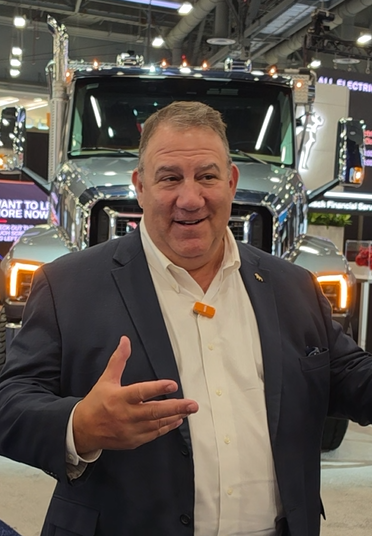
During my conversation with Jonathan Randall, President of Mack Trucks North America, one statement stood out to me.
Mack designed its newest trucks from the driver's seat outward.
That may sound like a simple design philosophy, but I think it reflects a much bigger shift happening across the industry.
The best truck is no longer just the one that hauls the heaviest load or lasts the longest. It is the one that drivers actually want to spend ten or eleven hours a day operating.
Driver retention starts with the truck
Fleet owners across North America continue to struggle with driver retention. While pay and home time remain important, the equipment drivers use every day also plays a significant role.
Think about where drivers spend their workday.
Their truck is their office. It is where they make decisions, deal with traffic, manage weather, communicate with dispatch, and often spend nights away from home.
A comfortable seat, better visibility, quieter cab, intuitive controls, and modern technology may seem like small improvements individually. Together, they can make the difference between a driver enjoying the job or looking for another employer.
Drivers often have choices. If two companies offer similar pay, the one providing newer, safer, and more comfortable equipment has an advantage.
Technology should reduce stress, not create it
Many experienced drivers argue that modern trucks have become too complicated.
There is some truth to that. Today's trucks contain far more electronics and software than they did twenty years ago.
But complexity alone is not the goal.
The goal is to remove workload from the driver.
Features like adaptive cruise control, lane keeping assistance, collision mitigation, and automatic emergency braking are not replacing drivers. They are reducing fatigue and helping drivers avoid situations that can quickly become dangerous.
The technology should feel like having another experienced professional sitting in the passenger seat, constantly watching the road.
The next step is predictive AI
One part of the conversation that I found especially interesting was Jonathan's explanation of predictive safety.
Today's systems are largely reactive.
A vehicle cuts you off.
Traffic suddenly stops.
A collision becomes imminent.
The truck detects the danger and reacts.
The next generation of AI will likely begin identifying risk before the dangerous situation fully develops.
Imagine the truck recognizing that it is entering a curve too quickly, detecting that traffic ahead is slowing, or recognizing that following distance is becoming unsafe before the driver even needs to react.
Instead of responding after a problem appears, the truck begins preventing the problem from developing in the first place.
That is a fundamental shift.
Drivers are not going away
Whenever artificial intelligence enters the conversation, someone inevitably asks whether truck drivers will disappear.
I do not believe that is where the industry is heading.
In fact, Jonathan made an important point during our interview.
Professional drivers will continue to be essential for a long time.
The role of the driver will evolve, just as it has evolved many times before. Drivers today already manage technology that did not exist twenty years ago, from electronic logging devices to collision avoidance systems.
Artificial intelligence will likely become another tool that helps drivers perform their jobs more safely and efficiently.
My takeaway
The future of trucking is not about replacing drivers with technology.
It is about building trucks that help drivers succeed.
The manufacturers that understand this will have an advantage. Fleet owners who invest in better equipment will likely have an easier time attracting and retaining professional drivers. And drivers who embrace new technology instead of resisting it may find themselves better prepared for the future of the industry.
Technology should not replace experience.
It should amplify it.
That, in my opinion, is where trucking is headed.
.png)

.png)


.png)